Renovation Loans: Finance Your Home Purchase and Improvements in One Loan
Buying a fixer-upper or planning a remodel in Maryland, Washington, DC or Virginia? A renovation loan may let you combine your home purchase and eligible improvements into one mortgage. Current homeowners may also finance eligible renovations through a refinance. Chris Jordan helps you compare Fannie Mae HomeStyle and FHA 203(k) renovation loan options based on your property and project.
Fannie Mae HomeStyle Renovation Loan: Purchase or Refinance and Remodel
A Fannie Mae HomeStyle Renovation loan is a conventional mortgage that can combine an eligible home purchase or refinance with the cost of approved improvements. It may be useful for buyers purchasing a fixer-upper or homeowners planning a remodel. Depending on program and lender requirements, qualifying improvements can include kitchen and bathroom renovations, additions, and other eligible projects.
HomeStyle renovation financing is different from a standard home improvement loan: the renovation funds are included in the mortgage transaction, and the property may be appraised based on its expected value after the improvements. Eligibility, down payment, contractor documentation, renovation budget and completion requirements must be reviewed for the specific transaction.
FHA 203(k) vs. Fannie Mae HomeStyle: Which Renovation Loan Fits?
Both programs can finance an eligible home purchase or refinance together with renovations, but they differ in important ways:
- Loan type: FHA 203(k) is FHA-insured financing; HomeStyle Renovation is conventional financing.
- Occupancy: FHA 203(k) generally serves eligible owner-occupied properties. HomeStyle can also accommodate certain eligible second homes and one-unit investment properties.
- Scope of work: FHA Limited 203(k) generally covers eligible minor, nonstructural work up to $75,000 in rehabilitation costs; Standard 203(k) can cover qualifying major or structural renovations and requires an FHA-approved 203(k) consultant. HomeStyle allows a broad range of eligible improvements, subject to its own limits and lender requirements.
- Down payment and mortgage insurance: Requirements depend on the transaction, borrower, and loan program. FHA mortgage insurance differs from conventional private mortgage insurance, which may apply to HomeStyle.
- Contractors and project review: Both require renovation plans, cost documentation, and lender oversight; specific consultant, contractor, draw, and completion requirements differ.
The best fit depends on your credit, available funds, property occupancy, planned repairs, and the total mortgage cost. We can compare both programs for your specific project. For current program guidance, see HUD’s FHA 203(k) program overview and Fannie Mae’s HomeStyle Renovation overview.
Choosing between programs? Read our FHA 203(k) vs. HomeStyle Renovation comparison for project scope, budget and consultant requirements.
Buying a Fixer-Upper: What Should You Review Before Making an Offer?
A renovation mortgage may combine the purchase of an eligible home with approved repairs or remodeling in one mortgage transaction. Before making an offer, review the property condition, proposed improvements, preliminary contractor budget and financing timeline with our team. A home that needs structural work may require a different renovation program from one that only needs cosmetic updates.
Plan for more than the construction quote: closing costs, permits, inspections, contingency reserves and any temporary housing needs can affect your available funds. Confirm which expenses can be financed, which must be paid separately and how the contractor will receive payments. For a step-by-step explanation, read our guide to buying and renovating a home with one mortgage.
Can I Use a Renovation Loan to Remodel My Current Home?
Yes. Eligible homeowners may use a renovation refinance, such as Fannie Mae HomeStyle Renovation or FHA 203(k), to refinance their existing mortgage and finance approved improvements in the same transaction. You do not have to be buying another home to explore these options.
A renovation refinance replaces your existing mortgage. Before deciding, compare your current rate, remaining loan term, new payment, closing costs and total borrowing cost with alternatives that could leave your first mortgage in place. Compare the complete financing options rather than interest rates alone.
For an initial project review, bring your approximate mortgage balance, property address, proposed work list and preliminary contractor estimate, if available. We can review the eligible work, expected completed value, full project budget and required reserves. The renovation programs we offer require an approved contractor; self-help work is not permitted.
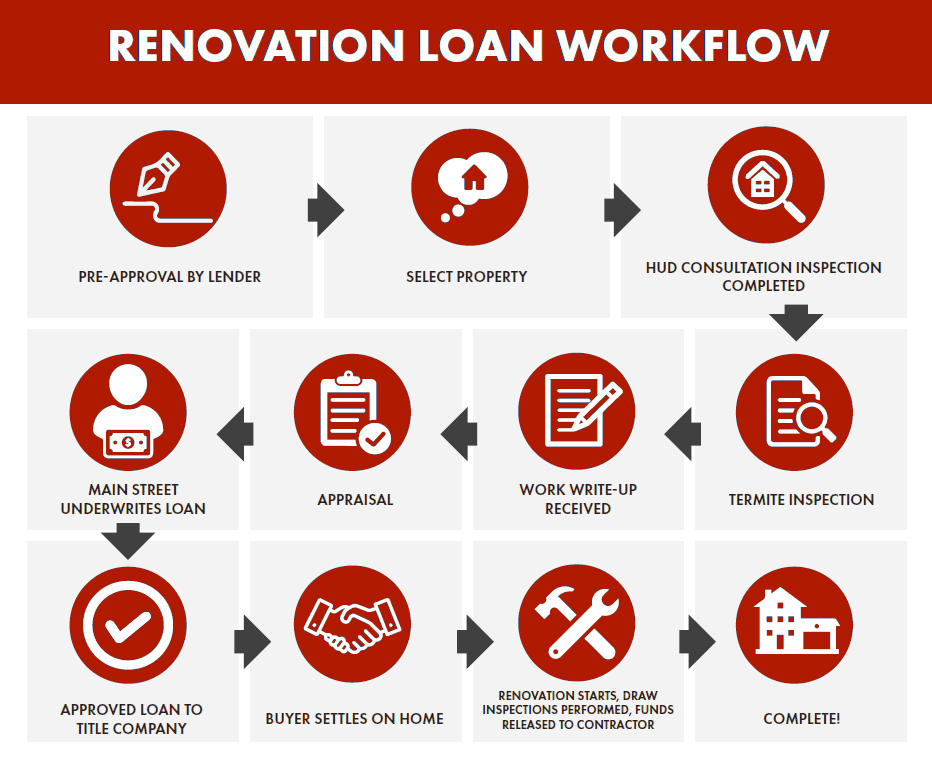
How Renovation Financing Works
Depending on the property and your goals, options may include FHA 203(k), Fannie Mae HomeStyle Renovation and VA renovation financing. For example, borrowers may use these programs for repairs, upgrades or properties that need improvements before meeting standard financing requirements.
However, requirements vary by program, property type, occupancy, credit profile and renovation scope. For instance, some programs focus on primary residences. In addition, eligible property types and renovation limits can differ. Therefore, the best option depends on the home and the planned improvements.
Another important benefit is the appraisal approach. The lender may base financing on the home’s expected value after eligible improvements are completed. As a result, buyers and homeowners may have more flexibility to finance repairs without relying only on the property’s current condition or value.

What Repairs and Remodeling Projects Can a Renovation Loan Finance?
Before choosing renovation financing, schedule a phone or office consultation with us. That way, we can explain the process, compare the available programs and answer your questions. Ready to discuss a renovation or remodel loan? Start your mortgage prequalification, call 240-670-5090, or email CJMT@mainstreethl.com.
Renovation Loan Requirements
First, renovation loan requirements vary depending on the loan program, property and scope of the planned improvements. In general, borrowers should expect the lender to review credit, income, assets, property eligibility, renovation plans, contractor information, and the estimated cost of the improvements. Next, borrowers typically document the renovation work and budget before closing.
An appraisal may also consider the property’s expected value after the planned improvements are completed. Specific requirements differ for FHA 203(k), Fannie Mae HomeStyle Renovation, and VA renovation financing. For that reason, choosing the right renovation loan involves more than comparing interest rates. In particular, the property type, needed repairs, contractor requirements, available funds, timeline and long-term goals can affect which program makes the most sense.
Finally, renovation loans require more expertise and experience than traditional mortgages. They have more moving parts and require more consideration and planning, but with the right guidance, they can bring excellent results to your home purchase or renovation project. Overall, I have extensive experience with these programs and would be happy to walk you through the entire process.