Renovation Loans: Finance Your Home Purchase and Improvements in One Loan
Buying a fixer-upper or planning a remodel in Maryland, Washington, DC or Virginia? A renovation loan may let you combine your home purchase and eligible improvements into one mortgage. Current homeowners may also finance eligible renovations through a refinance. Chris Jordan helps you compare Fannie Mae HomeStyle and FHA 203(k) renovation loan options based on your property and project.
How Renovation Financing Works
Depending on the property and your goals, options may include FHA 203(k), Fannie Mae HomeStyle Renovation and VA renovation financing. For example, borrowers may use these programs for repairs, upgrades or properties that need improvements before meeting standard financing requirements.
However, requirements vary by program, property type, occupancy, credit profile and renovation scope. For instance, some programs focus on primary residences. In addition, eligible property types and renovation limits can differ. Therefore, the best option depends on the home and the planned improvements.
Another important benefit is the appraisal approach. The lender may base financing on the home’s expected value after eligible improvements are completed. As a result, buyers and homeowners may have more flexibility to finance repairs without relying only on the property’s current condition or value.

What Repairs and Remodeling Projects Can a Renovation Loan Finance?
Before choosing renovation financing, schedule a phone or office consultation with us. That way, we can explain the process, compare the available programs and answer your questions.
Renovation Loan Requirements
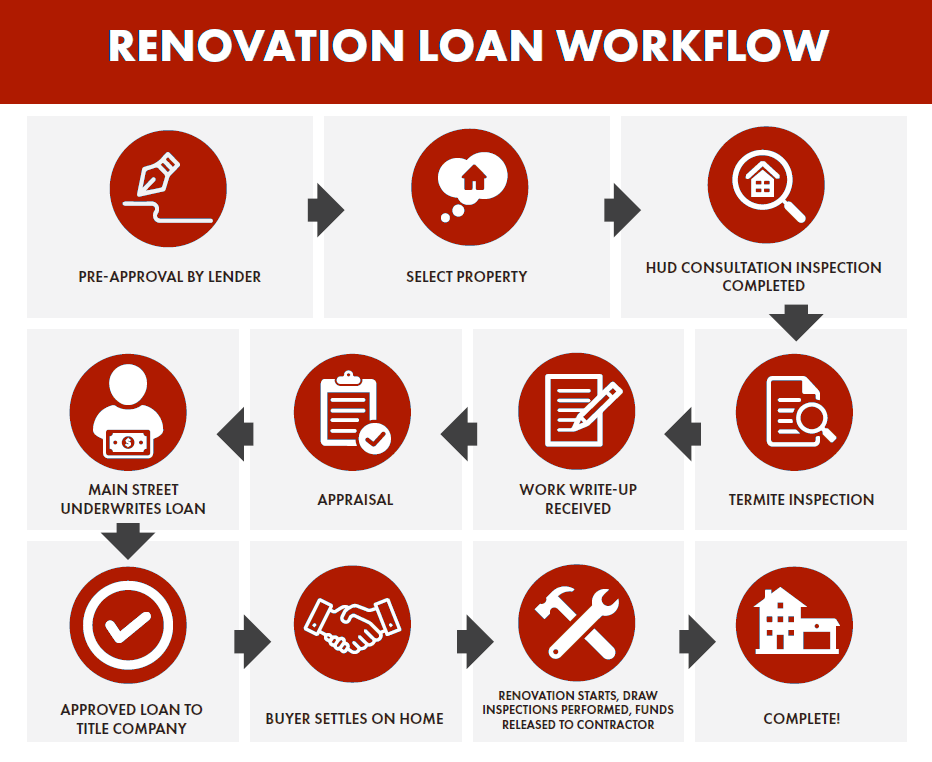
First, renovation loan requirements vary depending on the loan program, property and scope of the planned improvements. In general, borrowers should expect the lender to review credit, income, assets, property eligibility, renovation plans, contractor information, and the estimated cost of the improvements. Next, borrowers typically document the renovation work and budget before closing.
An appraisal may also consider the property’s expected value after the planned improvements are completed. Specific requirements differ for FHA 203(k), Fannie Mae HomeStyle Renovation, and VA renovation financing. For that reason, choosing the right renovation loan involves more than comparing interest rates. In particular, the property type, needed repairs, contractor requirements, available funds, timeline and long-term goals can affect which program makes the most sense.
Finally, renovation loans require more expertise and experience than traditional mortgages. They have more moving parts and require more consideration and planning, but with the right guidance, they can bring excellent results to your home purchase or renovation project. Overall, I have extensive experience with these programs and would be happy to walk you through the entire process.